| Region | |
|---|---|
| Subregion | France > Bordeaux > Left Bank > St Julien |
| Colour | Red |
| Type | Still |
This château is the largest of all the classed growths with 117 hectares of vines (4 of which are planted with white varieties). Top quality Saint Julien has been produced here since the late 1980s when it was bought by the Suntory group of Japan. This quality level is partly achieved by the production of a very good second wine, Les Fiefs de Lagrange, which in most vintages makes up more than 50% of production. The red varieties are planted 67% Cabernet Sauvignon, 28% Merlot and 5% Petit Verdot.
The 2024 is strongly Cabernet Sauvignon (84%) with 10% Merlot and 6% Petit Verdot. Concentration was helped by using reverse osmosis rather than chaptalisation - this reduced the yield to 26 hl/ha. ABV 12.93%. Maturation in 55% new oak. 55% grand vin, 45% Fiefs de Lagrange. Matthieu Bordes told us that it reminded him of elements of the 2012, 2014 and 2015 vintages.
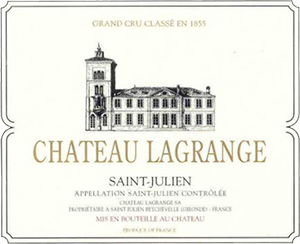

Deep garnet-purple colored. Needs a lot of swirling to coax out notes of juicy blackberries and black raspberries, plus hints of spice box, licorice and bay leaves. The light to medium-bodied palate delivers lightly chewy tannins and just enough freshness to match the delicate black and red berry layers, finishing savory.
Notes of minty cassis, blackberries and pencil shavings introduce the 2024 Lagrange, a medium-bodied, dense wine with a sweet core of fruit framed by somewhat firm and assertive tannins.
The 2024 Lagrange consists of 84% Cabernet Sauvignon (the second highest ever), 10% Merlot (the lowest ever) and the remainder Petit Verdot, with 11% vin de presse. Matured in 55% new oak, this has a tightly-wound bouquet that demands a little more coaxing than the Les Fiefs, though this was on a day when, for some reason, some Saint-Julien samples required it. The palate is medium-bodied and obviously driven by the dominant Cabernet, with grainy tannins and black fruit laced with graphite and cedar. Cohesive on the finish with just the right amount of sapidity, this is obviously not in the league of the benchmark 2022, but it constitutes a successful wine for the vintage. Drink: 2030-2050
Deep ruby colour. Smoky and seductive wood leads the nose at the moment, with slightly hidden but fairly ripe dark fruits underneath. The palate has a pithy tannic structure which builds, framing around the fruit to create quite a firm mouthfeel. Crunchy with tones of blood, red cherry and al dente dark fruits, this is spicy with wood through to the finish.
Classically balanced St Julien, firm cassis and white peppers, enjoyable mid palate texture, slate textured tannins add grip and tension, successful in the vintage.
A wonderful Lagrange from this challenging vintage. This has excellent depth and complexity, showing vivid berry fruit, blackcurrants, tapenade, spices and minerals. Crunchy and succulent with medium to full body and a long, succulent finish. Real poise.