
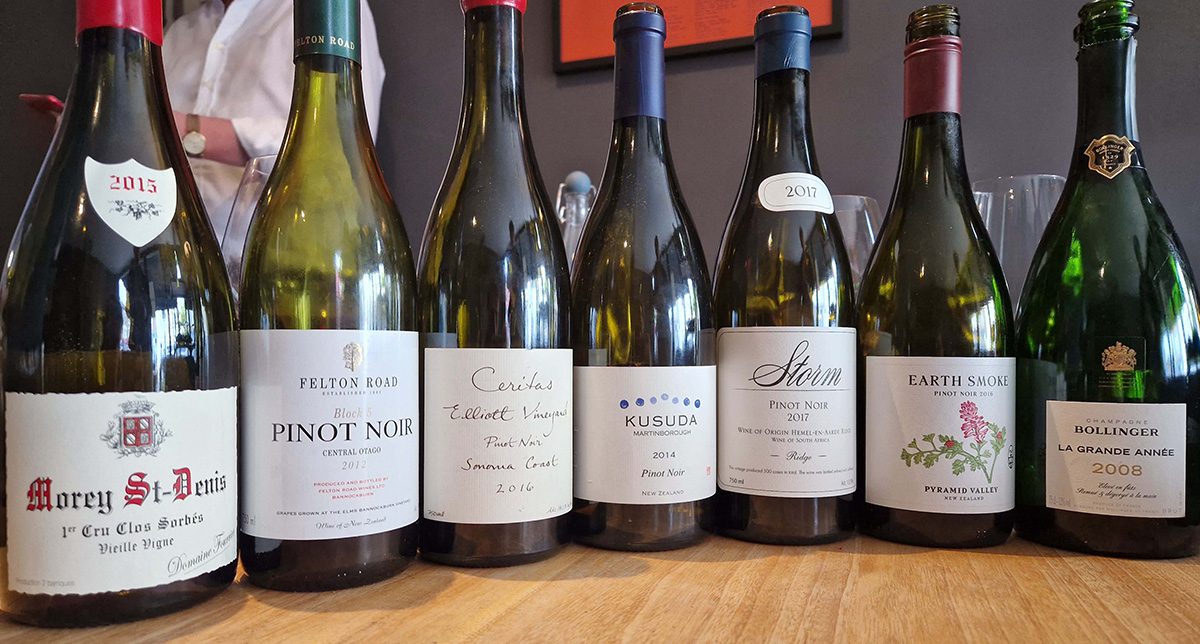
New Zealand has an astonishing presence and reputation within the wine world compared to the volume of wine it produces. Marlborough Sauvignon Blanc is one of the strongest regional brands of the New World, and the country – particularly Central Otago – is synonymous with Pinot Noir. There are roughly 5,500 hectares of Pinot Noir planted in New Zealand (compared to over 20,000 hectares of Sauvignon Blanc), with a large proportion intended for sparkling wine. To compare, the hectares-under-vine are 10,000 in Burgundy, 12,500 in Oregon, and nearly 20,000 in California. Despite the relatively small plantings of Pinot Noir, New Zealand is considered one of the most important areas for the variety. That is, in part, because New Zealand’s wine production has always looked to high quality and premium prices. The climate, too, plays a significant role in the potential here. Though the region is still in relative infancy compared to the Old World, vines are now starting to mature, reaching deep into soils and producing world-class wines that can stand up to Pinot produced anywhere in the world – including Burgundy itself.
At a recent tasting, we were lucky to have Andrew Donaldson over from Central Otago to discuss Akitu. The wines are produced from 12 hectares of vines. Akitu is a relatively young project, established in 2001, with 2012 the first vintage released commercially. The vineyards and plant material are superb and matched by expertise in the vineyard and winery. The wines are going from strength to strength and the latest vintage we tasted – 2019 – is superb for both the A1 and A2. We tasted the wines against the 2016 A1, and it was intriguing to see the evolving and improving style. Finesse, precision and a lightness of touch have only served to increase the quality here; you can see the notes below. The A2 offers a moreish, approachable introduction to Akitu – just 10% new oak with a lower percentage of wholebunch than the A1, it is soft, succulent Pinot Noir. A1 is more intense and though the texture is airy, there is clear and persistent grip for ageing. Over half the production comes from a single clone in a single plot. The A1 in particular crosses the divide between New World and Old, with a delicacy and precision in recent vintages that would have any blind taster second-guessing the wines.
After the tasting, we decided to pitch three other New Zealand Pinot Noirs against stiff competition from three other countries. The tasting notes are below, but the quality of all three wines was outstanding. In the past, New Zealand - and particularly Central Otago - Pinot Noir was pigeon-holed into one style: deeper coloured, darker fruited yet fresh in acidity, and always fruit driven with a squeaky clean precision. One of the biggest takeaways from the lunch was the unique style of each wine – these were not three carbon copies, each demonstrating a different side of Pinot Noir. From the wild and complex Pyramid Valley, to the bold and structured Felton Road, and finally a precise, refined Kusuda, each producer has a clear and different definition of the style they are trying to create. Their competition also performed well and the Fourrier, unsurprisingly, was the pick of the bunch. Calls for wine of the day were split between the Kusuda and the Fourrier - both were very expressive and finely balanced. Personally, the Kusuda edged it due to its purity, but those looking for savoury depth should look to the Burgundy that hit so many umami notes despite its youth.
We began the lunch with a bottle of Bollinger’s 2008 Grande Annee. What a wine. Intended just to kick off proceedings, it made everyone stand to attention. Great now, with a very promising future, it would be no surprise to see this gain a series of 100-point scores as it matures.
Pinot Noir A2, Akitu 2019
Bright ruby colour. Very fruit driven on the nose, fleshy and ripe with red fruit with a seductive light spiciness of wood smoke. The palate is soft, succulent and round. The tannins are gentle and ripe, making this a moreish, approachable style. Pure strawberry fruit, cherry cola and a hint of nutmeg on the finish.
Bright ruby colour. Wonderful fragrance, this has really opened up since our last tasting in February. Cherry blossom, wild strawberries, green peppercorns and rosemary on the nose. The palate has an airy intensity, weightless yet persistent, this is highly refined. Proper Pinot in character, all red fruit, fresh flowers and fine-grained tannin. Focused, lifted and deceptively intense, the equilibrium allows the bright fruit to shine. There is good grip on the back end, highlighting the ageing potential here. Impressive, the best Akitu yet.
Pinot Noir A1, Akitu 2016
Mid ruby garnet colour. Darker fruited than the 2019, with a sweet licorice and dark cherry tone underneath the red fruit. Succulent and powerful on the palate, with real depth and weight with hints of leather and spice box. The fruit is thicker, sweeter than 2019. Impressive intensity, with tannins that have started to melt into the wine yet still have the presence for further ageing. More identifiably "New World" in style, but a delicious drinker.
Pale straw colour. Outstanding nose, bringing lively citrus fruit, fresh bread, toasted cereals and deep biscuity brioche in equal measure. This has the x-factor, with a multi-dimensional and complex aroma that manages impressive ripeness, savoury depth and overarching freshness all in one. If anything, the palate is even better. The acidity is immediate and impressive, high but beautifully balanced by the intense fruit at the core. Harmonious between the fruit and savoury depth of lees ageing. The mousse is peristent and generous - creamy rather than prickly. Intensity builds on the finish adding both breadth and depth. A first class Champagne that is already delicious but can only improve over the coming decades.
Though this was the cheapest Pinot Noir here, it showed very well against all others on the day. Pale ruby in colour, there are layers of dried and wild strawberries together with a little dried herb on the nose. The palate is round and succulent, yet fresh in acidity. Very pure and still youthful in fruit, it is moreish and bright. Vibrant with just enough savoury depth, it is perfect to drink now and offers very good value for money, as so many South African wines do.
Pinot Noir Earth Smoke, Pyramid Valley 2016
The low-intervention principles at Pyramid Valley are immediately evident in the glass. This vintage comes from the time before Steve Smith MW took over operations here. Slightly hazy garnet colour. Powerful and unique aromatically. Pot pourri, white strawberry, leather, rose and confit red berries. The palate matches sweet fruit and acidic tang - this is lively with redcurrant, blood orange and fresh herbs. Intense and finely balanced, the tannins have now melted into the wine and it is gorgeous now. With air, the aromas become even more complex and enticing - though some were slightly perplexed by this wine at the start, it won everyone over by the end of the bottle.
Pinot Noir Elliott Vineyard, Ceritas 2016
Bright ruby colour. Sweeter and a little warmer on the nose that the other wines in the flight, this showcased the solar nature of the vineyard. Chock full of green spice and dried herbs, the wholebunch is very present here too, adding layers of spicy complexity. This is most evident on the palate, which is still tightly wound - there is much more to come here. Peppery and full of character, this should open up nicely over the next five years.
Pinot Noir, Kusuda 2014
Bright, translucent ruby in colour. The nose is still remarkably youthful and really pure. Red fruit, with a crystalline salinity and a hint of blueberry too. The palate shows the same restraint and focus - the delineation and attention to detail here is remarkable. Laser-like, with acidity, intense fruit, highly polished tannins and perfectly judged oak all in perfect harmony. This is an absolutely outstanding Pinot Noir from Kusuda, the best we have tasted from them. Brilliant now but with more to come.
Morey St Denis Clos Sorbés VV, Fourrier 2015
Standing out from the crowd with a confidently savoury character, this brings a uniquely Burgundian perspective to Pinot Noir. Balancing the warmth of 2015 with rich, earthy tones, the nose is starkly different to those around it. Mouthcoating structure on the palate points to the youthfulness here, but the gloss and richness of the vintage adds a succulent, spherical nature to the wine. Seductively ripe and yet savoury throughout, this is generous Morey that will reach its peak in another decade or more. Delicious and contemplative.
Pinot Noir Block 5, Felton Road 2012
Just starting to show a little garnet at the rim, the Block 5 was very tight on opening and needed air to settle. With time, hedgerow fruits and darker, sweet cherries come through with just a hint of leather and spice box. The palate is deep, structure and quite full bodied. Unfurling to show dried red fruit, woody herbs and garrigue, there is an earthy tone that is closest to the Fourrier of all the New World wines. Fleshing out to the finish, which is long, saline and driven, this has much further to go and will warrant patience or decanting to reveal its full potential.